Water scarcity is becoming a growing concern in many urban areas, making sustainable water management essential for apartment communities. Rainwater harvesting is a practical solution by collecting and storing rainwater.
By utilising this naturally available resource, apartments can reduce dependence on municipal water supplies, lower water costs, and contribute to groundwater conservation. This guide explores how rainwater harvesting works in apartments and the different methods and benefits it offers for long-term water sustainability.
Rainwater harvesting is the process of collecting, filtering, and storing rainwater from catchment surfaces such as apartment rooftops for future use or groundwater recharge. An apartment rainwater harvesting system consists of gutters, downpipes, filters, storage tanks, and recharge structures that help capture rainwater that would otherwise flow into stormwater drains.
In apartment communities, harvested rainwater can be used for non-potable purposes such as flushing toilets, gardening, cleaning common areas, and vehicle washing. With advanced treatment systems, it can also be treated for potable use where permitted by local regulations.
As urban populations grow and water demand increases, rainwater harvesting has become a practical solution for water security and promoting sustainable water management in residential developments. Let's discuss why it's of major importance for apartments.
Rapid urbanisation has increased pressure on existing water resources. According to NITI Aayog's Composite Water Management Index, several Indian cities are facing groundwater depletion, making alternative water sources essential. Rainwater harvesting helps supplement water availability and reduces the impact of seasonal shortages.
Many apartment complexes rely on tanker water during periods of inadequate municipal supply. The expense of purchasing tanker water can increase maintenance costs for residents. By utilizing rainwater, apartment communities can reduce their dependence on external water sources and lower long-term operational expenses.
Rainwater harvesting promotes use of natural resources by capturing rainfall that would otherwise be lost as runoff. Implementing these systems into apartment developments contributes to sustainable urban infrastructure and supports long-term environmental conservation goals.
More-than-usual extraction of groundwater has led to declining water tables in many urban regions. Rainwater harvesting systems that include recharge pits or recharge wells allow rainwater to percolate into the ground, helping replenish aquifers and improve groundwater availability over time.
Heavy rainfall in cities often overwhelms drainage systems, leading to flooding and water accumulation. Rainwater harvesting reduces surface runoff by diverting rainwater into storage or recharge structures, thereby easing pressure on urban drainage networks.
Rainwater harvesting is increasingly recognizable as an important sustainability feature in residential projects. It contributes to green building initiatives and commitment to environmentally responsible development, which are becoming important for modern homebuyers.
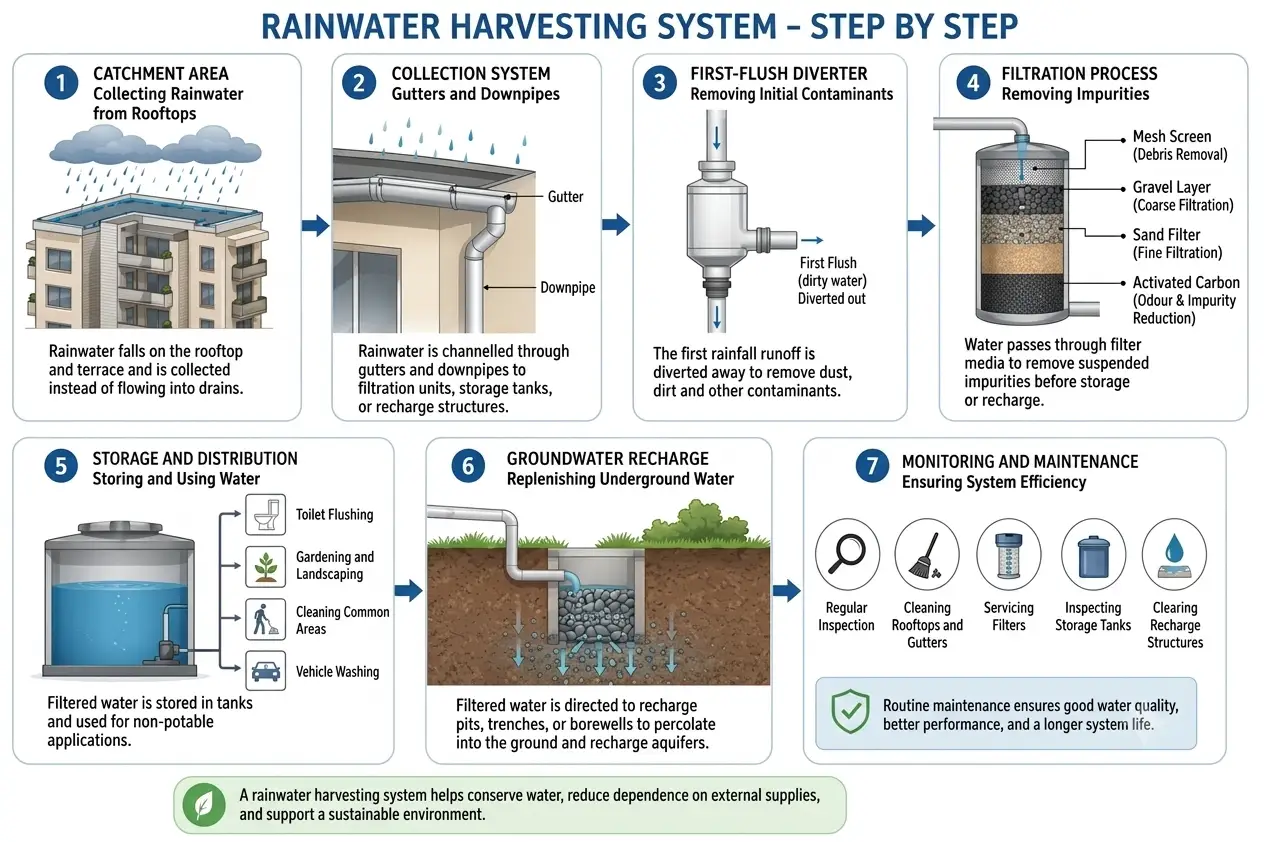
Rainwater harvesting in apartments includes several processes such as collecting rainwater from rooftops, removing impurities through filtration, and either storing the water for future use or directing it to recharge groundwater sources. This process is designed to maximize the utilisation of rainfall instead of depending on municipal and groundwater supplies.
The rooftop and terrace of an apartment building is the primary catchment area. Rainwater that falls on these surfaces is collected instead of flowing into stormwater drains. To ensure better water quality, the catchment area should always be cleaned regularly and kept free from leaves, dust, bird droppings, and other debris.
Once rainwater is collected on the rooftop, it is channelled through a network of gutters and PVC downpipes installed along the building structure. These pipes transport the water to filtration units, storage tanks, or recharge structures located at the ground level or basement. The size and capacity of the collection system should be designed based on the roof area and local rainfall intensity to ensure efficient water transfer during heavy rains.
The first rainfall after a dry period carries dust, dirt, leaves, and other contaminants collected on the rooftop surface. A first-flush diverter is installed to redirect this initial runoff away from the harvesting system. By preventing the first batch of rainwater from entering the storage tank, the overall quality of harvested water is significantly improved.
After the first flush is diverted, the remaining rainwater passes through filtration units to remove suspended impurities before storage or recharge. Common filtration materials include:
Proper maintenance and periodic cleaning of filters are essential to ensure the effectiveness of the system.
Filtered rainwater can be stored in underground sumps, overhead tanks, or storage reservoirs for later use. The stored water is utilised for non-potable applications such as:
In apartments with dual plumbing systems, harvested rainwater can be distributed separately from the potable water supply.
Instead of storing the filtered water, apartment communities may direct it into recharge pits, recharge trenches, or borewells. This allows rainwater to percolate into the soil and replenish underground aquifers. Groundwater recharge helps improve local water tables and supports the long-term availability of borewell water, particularly in regions experiencing declining groundwater levels.
For optimal performance, rainwater harvesting systems require routine inspection and maintenance. This includes cleaning rooftops, clearing gutters, servicing filters, inspecting storage tanks, and ensuring that recharge structures remain free from blockages. A well-maintained system improves water quality and efficiency and extends the lifespan of the infrastructure.
Rainwater harvesting systems can be classified based on how rainwater is collected and utilised. In apartment communities, the choice of method depends on factors such as available space, building design, rainfall patterns, and the intended use of the harvested water. The following are the 3 commonly used methods of rainwater harvesting in residential developments.
Rooftop rainwater harvesting involves collecting rainwater directly from the roofs and terraces of apartment buildings. The rooftop acts as the catchment area, where rainwater is channelled through gutters and downpipes to filtration units. After filtration, the water is either stored in tanks for future use or directed to groundwater recharge structures. This method is widely adopted in apartment complexes because it utilises the existing roof area for water collection without requiring additional land.
This harvesting refers to the collection of rainwater that flows over the ground surface during rainfall. In apartment communities, runoff from open spaces, internal roads, landscaped areas, and parking zones is diverted through drainage channels into storage tanks or recharge structures. This method helps capture rainwater that would otherwise be lost through stormwater drainage systems.
Groundwater recharge is a rainwater harvesting method in which collected rainwater is allowed to infiltrate into the ground to replenish underground aquifers. After undergoing basic filtration, the water is directed into recharge pits, recharge trenches, percolation wells, or existing borewells. Rather than storing water above ground, this approach focuses on restoring groundwater reserves and improving the availability of water in nearby wells and borewells.
Begin by evaluating the feasibility of installing a rainwater harvesting system in the apartment complex. This assessment should include:
A detailed site assessment helps determine whether the project is technically viable and identifies the most suitable system design.
Estimate the quantity of rainwater that can be collected annually based on factors such as roof area, local rainfall, and collection efficiency. The calculation generally considers the following:
These estimates help to decide the required storage capacity and the potential contribution of harvested rainwater toward overall water demand.
Select the most appropriate rainwater harvesting approach based on the apartment's requirements and site conditions. Options may include:
The choice should align with the community's water usage patterns and long-term sustainability goals.
Develop a collection system that efficiently conveys rainwater from the catchment area to filtration and storage structures. The design should include:
Proper system design is essential to maximise collection efficiency and minimise water loss.
Install suitable filtration units to improve the quality of harvested rainwater before it reaches storage or recharge systems. Common filtration components are:
All piping connections should be securely installed and tested to ensure uninterrupted flow and prevent leakages.
Based on the selected system design, construct the necessary infrastructure to store or recharge harvested rainwater. This may involve:
The size and type of structure should be determined by the estimated rainwater harvesting potential and intended use.
Before full-scale operation, inspect the system to verify that all components function correctly. The evaluation process should include:
Periodic inspections after commissioning help identify operational issues early and maintain system efficiency over time.
Routine maintenance is essential to ensure the long-term effectiveness of a rainwater harvesting system. Maintenance activities typically include:
Apartment communities may choose to assign maintenance responsibilities internally or engage professional service providers through annual maintenance contracts.
Rainwater harvesting offers both immediate and long-term advantages for apartment communities. Beyond reducing reliance on external water sources, it supports sustainable water management, improves resilience during shortages, and contributes to environmentally responsible living.
One of the most noticeable benefits of rainwater harvesting is the reduction in water-related expenses. Harvested rainwater can be used for applications such as toilet flushing, gardening, cleaning common areas, and vehicle washing, lowering dependence on municipal or tanker water supplies. Studies and residential case examples have reported that apartment communities can reduce their overall water consumption by up to 40%, resulting in significant savings on monthly water bills.
Rainwater harvesting captures rainfall that would otherwise flow into stormwater drains and go unused. By utilising this alternative water source, apartment communities can reduce pressure on freshwater reserves and promote responsible consumption practices. This approach becomes increasingly important in urban areas where growing populations continue to increase demand for limited water resources.
When excess rainwater is directed into recharge pits, trenches, or borewells, it infiltrates the soil and replenishes underground aquifers. Groundwater recharge plays a vital role in maintaining local water tables, particularly in regions experiencing excessive groundwater extraction. Recharge mechanisms can also improve the yield of existing borewells over time, enhancing the long-term availability of water.
Rainwater harvesting provides an additional source of water that can supplement existing supplies during periods of scarcity. This becomes especially valuable during summer months, irregular municipal supply schedules, or unexpected disruptions in water availability. Stored rainwater can help apartment communities maintain essential activities without relying entirely on external sources.
Integrating rainwater harvesting into residential developments encourages a more sustainable lifestyle by promoting efficient resource utilisation. By reducing dependence on treated water supplies, apartment communities indirectly contribute to lower energy consumption associated with water extraction, treatment, and distribution. The adoption of such systems aligns with the broader shift toward environmentally responsible housing practices.
During heavy rainfall events, large volumes of runoff can overwhelm urban drainage systems, leading to waterlogging and localised flooding. Rainwater harvesting systems intercept a portion of this runoff, reducing the burden on stormwater infrastructure. By slowing and redirecting rainwater, apartment complexes can contribute to improved stormwater management within urban environments.
Uncontrolled surface runoff can accelerate soil erosion, particularly in landscaped areas and open spaces surrounding residential communities. Rainwater harvesting helps regulate the movement of rainwater, reducing the erosive force of runoff and protecting the integrity of surrounding land.
Many apartment communities rely heavily on municipal distribution systems or private tanker services to meet their daily water requirements. Reducing reliance on external supplies enhances community resilience, particularly during periods of water restrictions or supply interruptions.
Harvested rainwater is well suited for gardening and irrigation purposes. Since it is naturally soft and free from many treatment chemicals commonly found in municipal water, it can be used effectively for maintaining lawns, landscaped areas, and ornamental plants. This reduces the need to utilise treated potable water for non-potable outdoor applications.
Rainwater harvesting systems consist of simple components such as gutters, filters, storage tanks, and recharge structures. With periodic cleaning and routine inspections, these systems can operate efficiently for many years. The combination of low maintenance requirements and long-term water savings makes rainwater harvesting a practical investment for apartment communities.
Sustainability features are increasingly influencing homebuyer preferences. Apartments equipped with rainwater harvesting systems are often perceived as more resource-efficient and future-ready. As awareness of environmental issues and water security continues to grow, properties incorporating water conservation measures may become more attractive to prospective buyers seeking sustainable living environments.
Rainwater harvesting contributes toward achieving water-efficiency goals commonly associated with green building standards and sustainable development practices. Its inclusion in residential projects reflects a commitment to responsible resource management and environmentally conscious design principles. For developers and housing communities pursuing sustainability initiatives, rainwater harvesting represents an important component of integrated green infrastructure.
Choosing an apartment equipped with a rainwater harvesting system offers long-term benefits for both homeowners and the environment. These systems collect and store rainwater from rooftops and other suitable surfaces for various non-potable uses, helping reduce dependence on external water sources.
By choosing apartments with rainwater harvesting systems, homebuyers can enjoy practical advantages while contributing to a greener and more sustainable environment.
We believe that creating living spaces also means embracing practices that protect and preserve our natural resources. By incorporating sustainable features such as rainwater harvesting into our projects, we offer homes that are not only comfortable and ready for the future but also environmentally responsible. Through thoughtful planning and a commitment to sustainability, Adora Homes continues to build communities that support a better quality of life for generations to come.

Important Checklist for Maintaining Your Apartment in Monsoon

Understanding RERA Before Buying Property For Home Buyers.

How to Finance Your Luxury Apartment Purchase in 2026?

AI Is Used in Real Estate